



In Stock
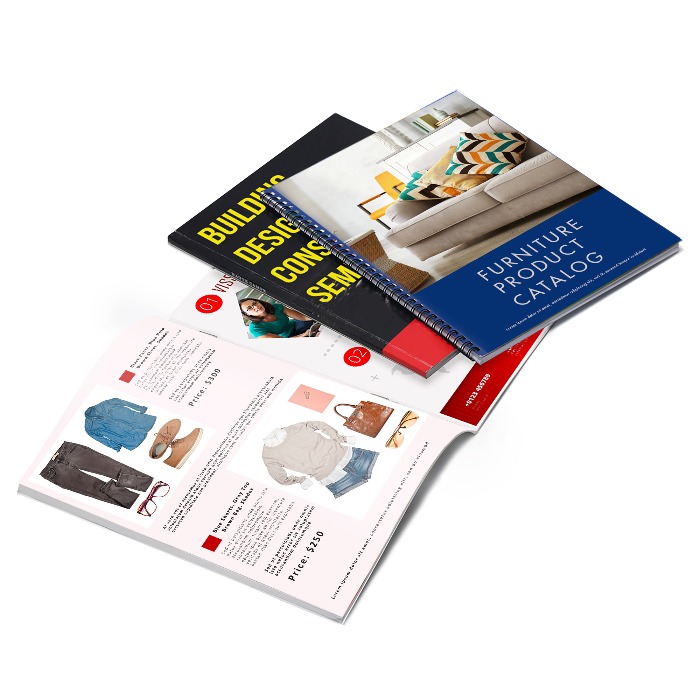
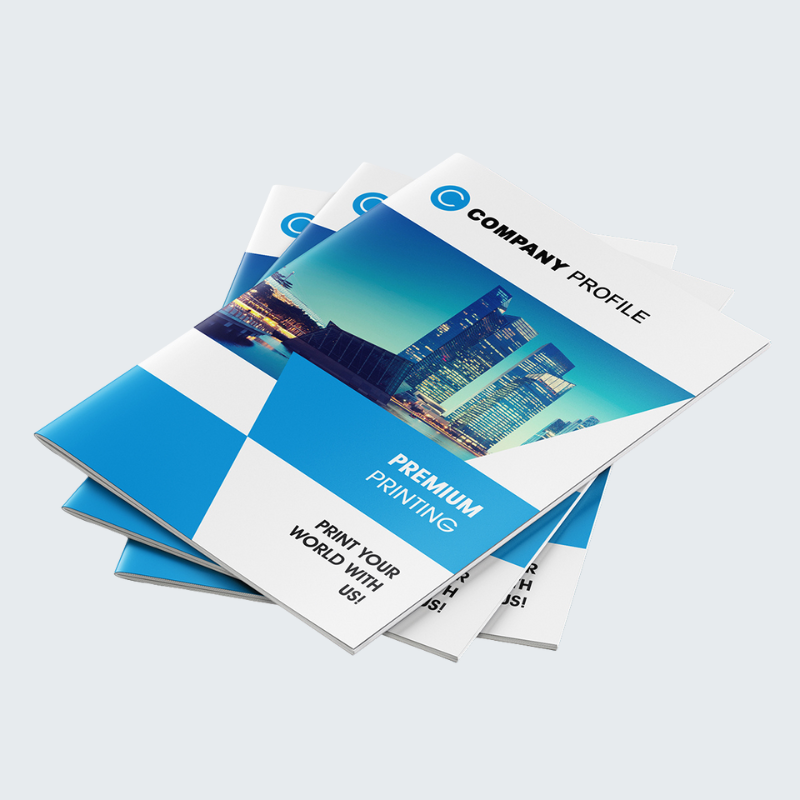
Professionally printed custom booklets designed to showcase your brand, educate your audience, and deliver information with clarity. Available in multiple sizes, paper stocks, bindings, and premium finishing options.
What file format should I use for the best print quality?
For sharp text and clean graphics, we recommend vector-based files such as AI, CDR, PSD, or PDF. Vector files allow better scalability and editing flexibility during print preparation.
What resolution should my images be saved at?
All images should be at least 300 DPI for high-quality printing. Images taken from websites are often low resolution and may appear blurry or pixelated when printed.
Why is stapled binding called saddle stitching?
Saddle stitching involves folding printed sheets and stapling them along the spine. The machine used resembles a saddle, which is how the process got its name.
What happens if I’m not satisfied with the final product quality?
Every order goes through strict quality checks. If you notice any defects, contact us immediately and our team will work with you to resolve the issue promptly.
What is the difference between saddle-stitched and perfect-bound booklets?
Saddle-stitched booklets are bound using staples and are best for lower page counts, while perfect-bound booklets use adhesive binding and are ideal for thicker publications.
Is my artwork reviewed before printing?
Yes, we conduct a free technical artwork check to verify resolution, bleed, and file setup. Content accuracy such as spelling or layout design is the client’s responsibility.
Why must saddle-stitched booklets have page counts in multiples of four?
Each folded sheet creates four pages, so saddle-stitched booklets must follow this structure to bind correctly.
Why can’t I upload artwork directly for perfect-bound booklets?
Perfect binding requires manual layout adjustments. Our design team prepares a proof and shares it with you for approval before printing.
What does bleed mean in printing?
Bleed is the extra 1/8 inch of artwork extended beyond the final trim size to ensure colors and images reach the edge after cutting.
| Specification | Details |
|---|---|
| Material Options | White Papers: Gloss Text, Matte Text, Uncoated, Cover Stock |
| Paper Stock Thickness | 80lb, 100lb |
| Cover Stock Thickness | 10pt, 12pt |
| Orientation / Style | Horizontal, Vertical |
| Binding Options | Saddle Stitching, Spiral Binding |
| Available Sizes | 8.5 × 5.5 inches, 6 × 9 inches, 8.5 × 11 inches, Custom Sizes Available |
| Lamination Types | Gloss, Matte, Sandy Matte, Soft Touch, Pattern |
| Coating Options | Gloss AQ, Satin, Varnish, Spot UV, Flood UV |
| Special Features | Foil Stamping, Embossing, Debossing, Custom Die-Cut Shapes, Metallic Inks |
| Additional Options | Custom Perforation, Hole Drilling |
| Starting Price | As low as $1.00 per piece |
| SKU | OP-001 |
Booklets offer an effective way to communicate detailed information while reinforcing brand identity. Their structured layout allows businesses to present content in a logical, easy-to-follow format using text, visuals, and illustrations.
Custom booklets are commonly used for catalogs, manuals, reports, educational materials, and promotional inserts. In product packaging, booklets play a vital role by providing usage instructions, safety guidelines, warranty information, and customer support details—enhancing the overall customer experience.
Saddle Stitching: Cost-effective and ideal for lightweight booklets with lower page counts.
Perfect Binding: Creates a clean, square spine for thicker catalogs and magazines.
Spiral Binding: Allows booklets to lay flat, making them ideal for manuals and workbooks.
Wire-O Binding: A durable and professional option for presentations and calendars.
Comb Binding: Flexible and economical, suitable for reports and training materials.
Section-Sewn & Case Binding: Premium binding methods used for hardcover and long-lasting publications.
With expert printing, premium materials, and customizable finishes, Creative Offset Printing helps you create booklets that inform, engage, and leave a lasting impression
Custom printed booklets are a powerful communication and marketing tool for businesses across all industries. At Creative Offset Printing, we produce high-quality booklets that combine exceptional print clarity, durable materials, and professional binding to help you present information in a polished and engaging format.
Our booklets are ideal for product catalogs, instruction manuals, training guides, event programs, company profiles, and promotional materials. Each booklet is carefully crafted to ensure smooth page flow, crisp text, and vibrant imagery, making your content easy to read and visually impactful.
You can fully customize your booklet’s size, orientation, paper stock, binding style, and finishing options to match your brand identity and functional needs. Whether you need a lightweight saddle-stitched booklet for marketing campaigns or a premium perfect-bound booklet for catalogs and reports, we deliver consistent quality from start to finish.
We also perform a free technical artwork check before printing to ensure proper setup, accurate colors, and optimal print results. With competitive pricing, flexible customization, and expert support, Creative Offset Printing is your trusted partner for custom booklet printing.
© Creative Offset Printing | Developed by PageCraft Technologies
Reviews
There are no reviews yet.